
🗓️ July 1, 1913: The Zipper Gets a Makeover—and a Future

“From boots to bags to blue jeans—nothing zips along quite like this.”

🧵 The Reinvention of the Zipper

On July 1, 1913, Swedish-American engineer Gideon Sundback was granted U.S. Patent No. 1,060,378 for his “Separable Fastener.” This was no minor tweak—it was the first truly functional version of what we now call the zipper.
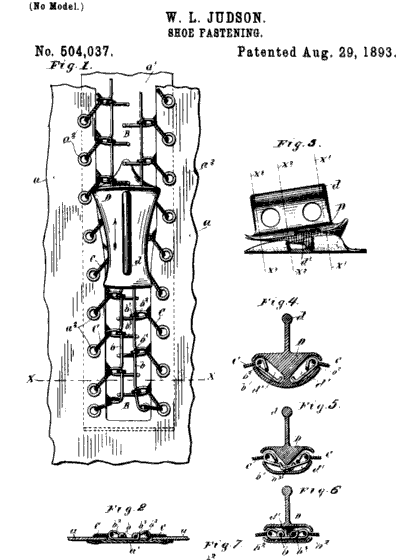
Earlier attempts, like Whitcomb Judson’s 1890s “Clasp Locker,” were clever but clunky. Sundback’s design introduced interlocking metal teeth and a slider mechanism that made opening and closing fabric smooth—and almost addictive. The modern zipper was born.

🧰 Why It Was Revolutionary

  • Speed and simplicity: Much faster and neater than buttons or laces.
  • Widespread utility: Used in boots, flight suits, dresses, tents, luggage—you name it.
  • Cultural icon: Eventually became synonymous with cool—think leather jackets and blue jeans.

🧑‍🔧 A Zipper by Any Other Name...

The term “zipper” didn’t appear until the 1920s, when B.F. Goodrich used Sundback’s fasteners on their rubber boots and coined the catchy name based on the “zip!” sound. And just like that, a verb was born.

🧾 TL;DR Summary

  • Date: July 1, 1913
  • Inventor: Gideon Sundback
  • Invention: Separable Fastener (a.k.a. the modern zipper)
  • Impact: Revolutionized clothing design, fasteners, and eventually entire fashion subcultures

📣 Final Thought

Buttons may be charming, and velcro might have its fans—but the zipper is the rockstar of fasteners: efficient, satisfying, and still stylish more than a century later. On July 1, we salute the small invention that holds everything together.

Comments

Popular posts from this blog

💡 July 3, 1886: Karl Benz Drives the First Automobile

“Before road trips, traffic jams, and drive-thrus, there was one three-wheeled contraption—and a dream.” 🚗 The Day the Motor Age Began On July 3, 1886 , in Mannheim, Germany, Karl Benz took to the streets in the world's first true automobile: the Motorwagen . It was a three-wheeled, gas-powered contraption with a one-cylinder, four-stroke engine mounted on a wooden chassis—and it changed history. This wasn't just a glorified tricycle. The Motorwagen could reach speeds of 10 mph, and it had working steering, brakes, and even a rudimentary carburetor. While the ride was a little bumpy (and loud), Benz's invention proved that internal combustion could power personal travel. ⛽ Fueled by Innovation (and a Bit of Bravery) Patent No. 37435: Filed in January 1886, but the first public test drive was July 3. Self-propelled glory: No horse, no pedals, just pure mechanized motion. Historic passengers: Benz's wife, Bertha, later took the car on a 66-mil...

🗓️ July 8, 1963: Ampex Patents the First Video Tape Recorder for Home Use

“Before streaming, before DVDs, before ‘Be Kind, Rewind’—there was this.” 📼 Press Play on the Past On July 8, 1963 , Ampex Corporation was awarded U.S. Patent No. 3,099,754 for an invention that would quietly but completely reshape media consumption: the first practical home-use video tape recorder . Though it would take years to hit store shelves at a consumer-friendly price, this patent laid the groundwork for the glorious rise of the VCR. Before this, if you missed a TV show—tough luck. It aired once and vanished. But the Ampex system changed the game: magnetic tape could now capture full video signals, store them, and play them back on command. Suddenly, time-shifting was real, and broadcast television lost its grip on our schedules. 📺 How It Worked Magnetic tape: Recorded audio and video signals onto reels that could be rewound and reused. Analog innovation: Achieved relatively high-quality playback in a consumer-friendly format. Giant machines: Early v...