
🗓️ June 22: From Pins to Telegraphs—Howe & Edison Patent Practical Solutions

"Revolution can lie in the small—but mighty."

📌 June 22, 1832: John Ireland Howe Invents the First Practical Pin-Making Machine

Before 1832, making pins was a tedious, manual craft—cutting wire, pointing ends, and affixing heads by hand. On June 22, 1832, Connecticut-born inventor John Ireland Howe patented the first truly practical pin-making machine :contentReference[oaicite:2]{index=2}.

Howe’s machine automated the full process: cutting wire, pointing, heading, and even packing the finished pins. Imagine revolutionizing office supplies—one humble pin, mass-produced!
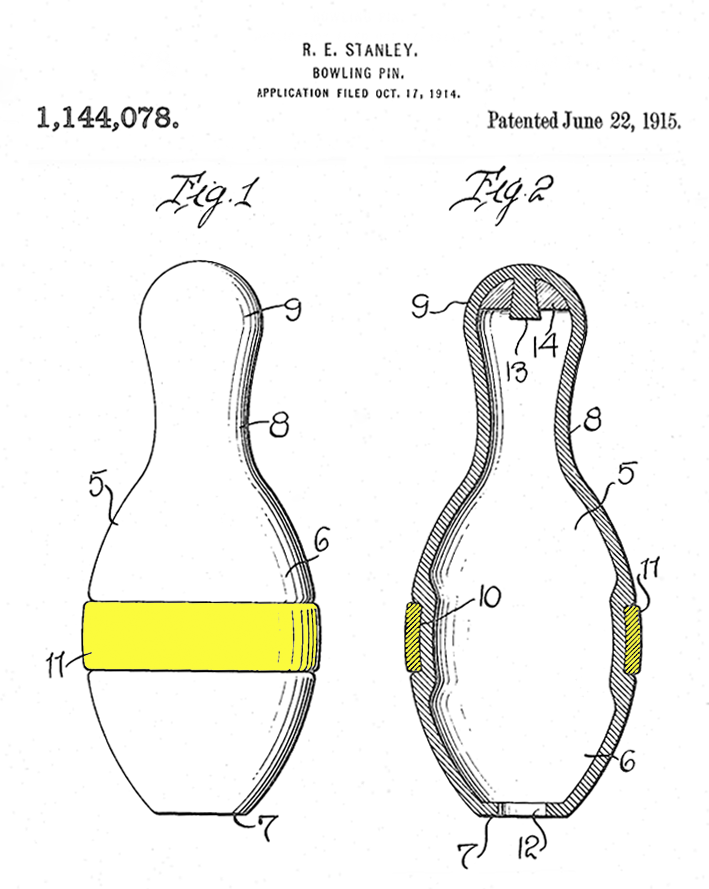
Patent drawing similar era pin-making machine
📜 Era‑style patent drawing of mechanical invention, June 22, 1915. (Public domain)

🔍 Why It Matters

  • Scale! Howe’s machine could produce thousands of pins per hour.
  • Game changer: It sparked U.S. industrial automation.
  • Business boom: Howe’s success led to founding one of America’s first industrial firms.

💡 June 22, 1869: Thomas Edison Patents Printing-Telegraph Improvement

Fast-forward 37 years. On June 22, 1869, a young Thomas Edison received U.S. Patent No. 91,527 for an innovative improvement in printing telegraphs :contentReference[oaicite:3]{index=3}.

This invention improved the speed and clarity of printed messages sent via telegraph by refining how the dots and ink were applied—it was key to faster, more reliable communication.

🔧 Technical Highlights

  • Enhanced mechanical action for instant printing of signals.
  • Improved readability—a vital step toward fax and modern printing tech.
  • Paved the way for Edison's later breakthrough: the phonograph!

⚖️ Connecting the Dots: Small But Significant

Both inventions proved that innovation isn’t reserved for grandeur—sometimes it's found in small improvements that reshape daily life and industry.

  • Howe’s pin machine transformed everyday goods manufacturing.
  • Edison’s printing telegraph advanced global communication systems.

Both patents were granted on the same date: June 22. Two different needs—office life and communications—met at the same moment in history.


😄 Witty Interlude

If you ever got a paper cut from a pin while reading telegrams—thank these inventors. At least the pin machine reduced price, and Edison made the message clearer!


🧾 TL;DR Summary

  • June 22, 1832: John Ireland Howe patents pin-making machine—boldly automating a mundane task.
  • June 22, 1869: Thomas Edison patents a printing-telegraph improvement—another step in swift messaging.
  • Outcome: Two inventions—same date, wide-ranging impact.

📣 Join the Conversation

Which small innovation do you appreciate most—automating everyday objects or clearer telegraph prints?

Drop your thoughts below: Have you ever wondered how common objects got mass-made or how telegrams evolved into tweets?


📚 Sources

Comments

Popular posts from this blog

💡 July 3, 1886: Karl Benz Drives the First Automobile

“Before road trips, traffic jams, and drive-thrus, there was one three-wheeled contraption—and a dream.” 🚗 The Day the Motor Age Began On July 3, 1886 , in Mannheim, Germany, Karl Benz took to the streets in the world's first true automobile: the Motorwagen . It was a three-wheeled, gas-powered contraption with a one-cylinder, four-stroke engine mounted on a wooden chassis—and it changed history. This wasn't just a glorified tricycle. The Motorwagen could reach speeds of 10 mph, and it had working steering, brakes, and even a rudimentary carburetor. While the ride was a little bumpy (and loud), Benz's invention proved that internal combustion could power personal travel. ⛽ Fueled by Innovation (and a Bit of Bravery) Patent No. 37435: Filed in January 1886, but the first public test drive was July 3. Self-propelled glory: No horse, no pedals, just pure mechanized motion. Historic passengers: Benz's wife, Bertha, later took the car on a 66-mil...

🗓️ July 8, 1963: Ampex Patents the First Video Tape Recorder for Home Use

“Before streaming, before DVDs, before ‘Be Kind, Rewind’—there was this.” 📼 Press Play on the Past On July 8, 1963 , Ampex Corporation was awarded U.S. Patent No. 3,099,754 for an invention that would quietly but completely reshape media consumption: the first practical home-use video tape recorder . Though it would take years to hit store shelves at a consumer-friendly price, this patent laid the groundwork for the glorious rise of the VCR. Before this, if you missed a TV show—tough luck. It aired once and vanished. But the Ampex system changed the game: magnetic tape could now capture full video signals, store them, and play them back on command. Suddenly, time-shifting was real, and broadcast television lost its grip on our schedules. 📺 How It Worked Magnetic tape: Recorded audio and video signals onto reels that could be rewound and reused. Analog innovation: Achieved relatively high-quality playback in a consumer-friendly format. Giant machines: Early v...

🗓️ July 1, 1913: The Zipper Gets a Makeover—and a Future

“From boots to bags to blue jeans—nothing zips along quite like this.” 🧵 The Reinvention of the Zipper On July 1, 1913, Swedish-American engineer Gideon Sundback was granted U.S. Patent No. 1,060,378 for his “Separable Fastener.” This was no minor tweak—it was the first truly functional version of what we now call the zipper . Earlier attempts, like Whitcomb Judson’s 1890s “Clasp Locker,” were clever but clunky. Sundback’s design introduced interlocking metal teeth and a slider mechanism that made opening and closing fabric smooth —and almost addictive. The modern zipper was born. 🧰 Why It Was Revolutionary Speed and simplicity: Much faster and neater than buttons or laces. Widespread utility: Used in boots, flight suits, dresses, tents, luggage—you name it. Cultural icon: Eventually became synonymous with cool—think leather jackets and blue jeans. 🧑‍🔧 A Zipper by Any Other Name... The term “zipper” didn’t appear until the 1920s, when B.F. Goodrich u...