"Tap, tap, tap, tap, tap … Ding!"
⌨️ June 23, 1868: Christopher Latham Sholes’ Type-Writing Machine Patent (U.S. No. 79,265)
On June 23, 1868, inventor Christopher Latham Sholes was granted U.S. Patent No. 79,265 for his type‑writing machine — the first practical typewriter that would pave the way for mass-market typing devices. 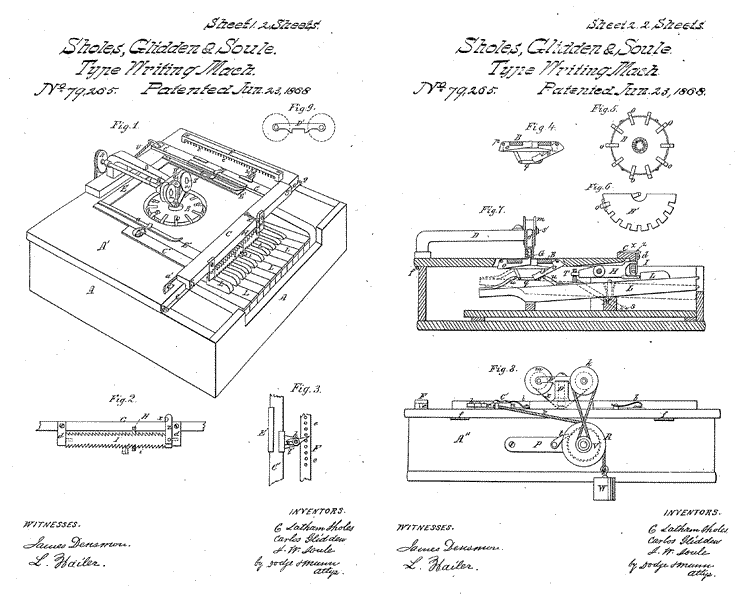
Not the very first patent ever for a keyboard device—but the first that proved reliably useful, leading to commercial success when licensed to Remington & Sons in 1873.
✍️ What Made It Practical?
- A mechanical layout that struck typebars onto an inked ribbon to print distinct characters.
- The early inverted-V design—Sholes’ team introduced the now-ubiquitous QWERTY keyboard to reduce jamming :contentReference[oaicite:2]{index=2}.
- First mass production as the Remington Model 1, making typing accessible to offices and writers.
Its impact was immediate: typing became a fast, legible alternative to handwriting, fueling business communication and opening careers—especially for women in clerical roles.
🔠 Why It Matters
- Revolutionized writing: Before email and keyboards, typed letters were sharper, quicker, and standardized.
- Legacy lives on: That QWERTY layout? Still the default on your laptop ($@$%).
- Bridge to modern tech: Linotype presses, computer keyboards and even touchscreen layouts trace ancestry to Sholes’ design.
😄 Witty Interlude
Imagine your smartphone’s autocorrect if Sholes had left the keyboard scrambled—your next text might say “btewq” instead of “hello.” Thanks, QWERTY!
Comments
Post a Comment