“Two patents—one secured the land, the other harnessed the sun.”
🌾 June 25, 1867: Lucien B. Smith Patents the Original Barbed Wire
On this date in 1867, Lucien B. Smith of Ohio received a patent for a primitive version of barbed wire, described as an “artificial thorn hedge”. This invention addressed a critical challenge on the prairie: how to fence vast lands when timber was scarce.
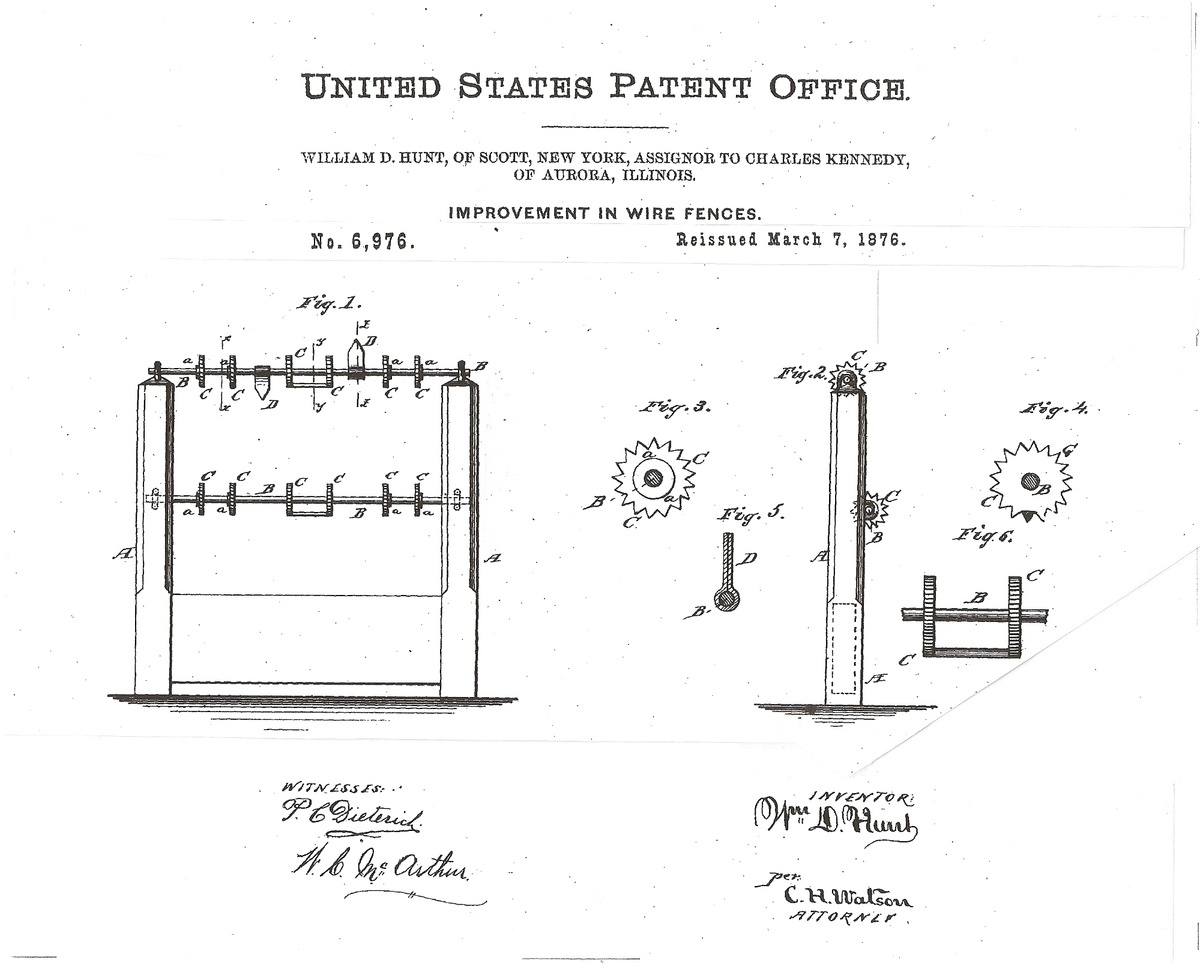
Smith’s design featured short metal spikes attached to a smooth wire—an early take on what would later become the unstoppable “devil’s rope.” Though his version wasn’t the ultimate one, it set the stage. Over the next few years, hunters and farmers alike pursued better variants, leading to Joseph Glidden’s dominant design in the 1870s :contentReference[oaicite:2]{index=2}.
🛠 Why It Was a Breakthrough
- Economical fencing: Rapidly contained livestock across open range.
- Settlement boom: Farmers could enclose larger plots at lower cost.
- Unintended consequences: It sparked the end of wide-open cattle drives and fueled legal battles over land use.
☀️ June 25, 1946: Russel Ohl Patents the First Silicone Solar Cell
Fast-forward nearly 80 years. On June 25, 1946, engineer Russel Ohl received a patent for a “Light-Sensitive Electric Device,” recognized today as the first silicone-based photovoltaic cell
While silicon photodiodes had existed in crystal form since the 1930s, Ohl's version used refined silicon to convert light directly into electric current—an essential leap toward modern solar panels.
🌟 Why This Patent Shone Brightly
- Clean energy prototype: Demonstrated electricity from light without combustion.
- Material innovation: High-purity silicon improved efficiency drastically.
- Solar evolution: Sparked later breakthroughs like the 1954 Bell Labs cell that generated usable power.
⚖️ What Do These Have in Common?
Both patents—on June 25—responded to real-world needs:
- Smith’s barbed wire protected livelihoods and shaped land ownership across North America.
- Ohl’s solar cell launched the possibility of renewable energy and off-grid power.
They represent the enduring power of invention—transforming frontier survival and lighting up future generations alike.
😄 Witty Interlude
From fencing cattle to harnessing sunshine—it’s not every day you connect livestock and photovoltaics, but here on June 25, we do!
✨ Suggested Enhancements
- 🖼 Image: Patent diagram of early barbed wire or cross-section of a solar cell (let me know, and I can source specific files).
- 📹 Video idea: Clip showing how solar panels convert sunlight—great visual juxtaposition to prairie fencing.
- 🔉 Audio: Cranking through barbed wire fencing or the soft hum of solar arrays—ambient extras!
- 📸 Call-out: “From ranchers to renewable pioneers, June 25 celebrates boundary-makers of every kind.”
🧾 TL;DR Summary
- June 25, 1867: First patent for barbed wire—revolutionizing land enclosure.
- June 25, 1946: First silicone solar cell patent—beginning the solar era.
- Both inventions: Solved practical problems in frontier life and energy independence.
📣 Join the Conversation
Would you rather build a wire fence across the prairie or the solar farm of the future? Ever had a solar-powered gadget or fenced-in a wild idea? Let us know in the comments!
Comments
Post a Comment