
🌟 July 4, 1802: The Birth of West Point—America’s Engineering Powerhouse

“Before rockets and rifles, America needed surveyors who could aim straight—with math.”

📖 The U.S. Military Academy Opens for Duty

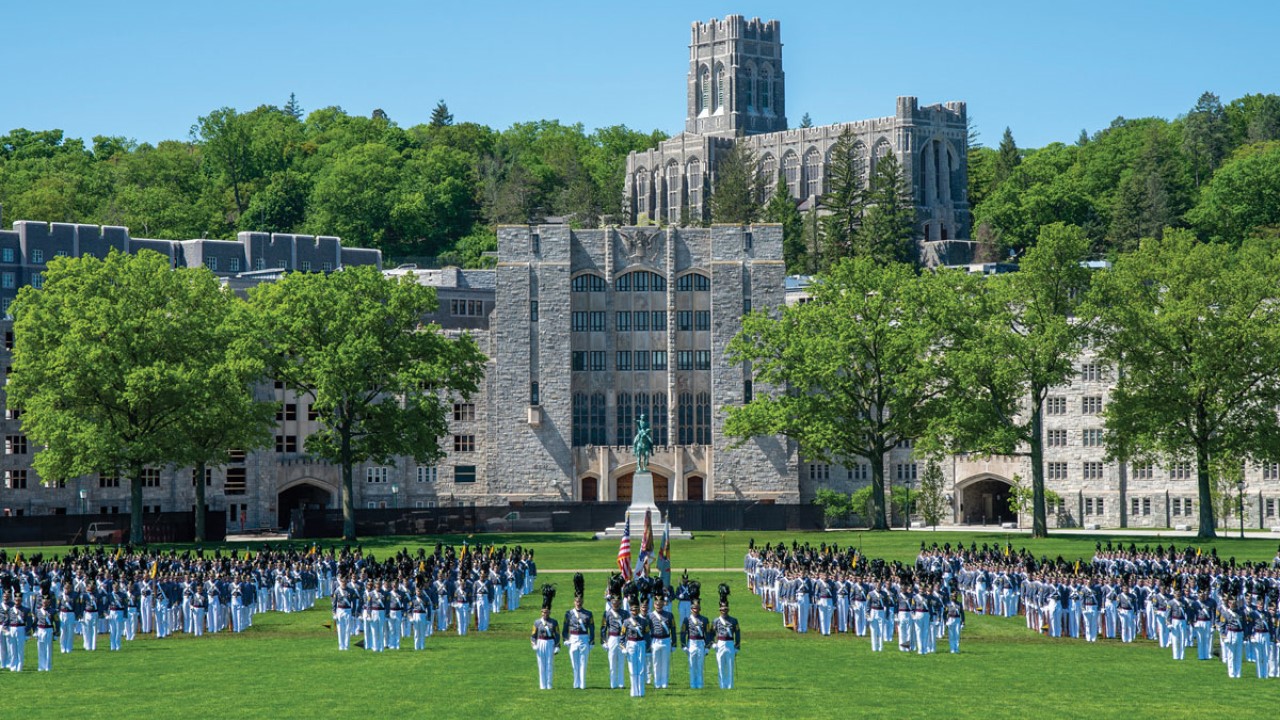
On July 4, 1802, as fireworks were (theoretically) popping and picnics being assembled across the young republic, the United States Military Academy at West Point officially opened its doors. It wasn’t just about creating soldiers—it was about engineering the future of the country.

Established by President Thomas Jefferson, West Point became America’s first national engineering school. Its graduates would go on to build roads, railways, bridges, canals, and later, some of the most powerful military machines and strategies the world had ever seen.
🔄 From Cannons to Calculus

  • Jefferson's brainchild: A military school with a strong core of math, science, and civil engineering.
  • National impact: Early graduates shaped the nation's infrastructure—literally.
  • Legacy of invention: West Point alumni include rocket scientists, weapons designers, and even astronauts.

⚖️ Independence by Design

The July 4th opening date wasn’t a coincidence. Jefferson intended the academy to reflect the values of an independent nation—where progress would come from discipline, knowledge, and scientific precision.

Over 200 years later, West Point is still graduating engineers of every kind, building not just machines but national resilience.

📆 TL;DR Summary

  • Date: July 4, 1802
  • Event: The United States Military Academy at West Point opens
  • Focus: Engineering, military science, leadership
  • Legacy: Built America’s roads, railways, and rockets—and trained the minds behind them

💬 Final Thought

On July 4, we celebrate more than freedom—we salute the institutions built to protect it. And West Point, born on this day, gave America some of its most brilliant builders in both war and peace.

Comments

Popular posts from this blog

💡 July 3, 1886: Karl Benz Drives the First Automobile

“Before road trips, traffic jams, and drive-thrus, there was one three-wheeled contraption—and a dream.” 🚗 The Day the Motor Age Began On July 3, 1886 , in Mannheim, Germany, Karl Benz took to the streets in the world's first true automobile: the Motorwagen . It was a three-wheeled, gas-powered contraption with a one-cylinder, four-stroke engine mounted on a wooden chassis—and it changed history. This wasn't just a glorified tricycle. The Motorwagen could reach speeds of 10 mph, and it had working steering, brakes, and even a rudimentary carburetor. While the ride was a little bumpy (and loud), Benz's invention proved that internal combustion could power personal travel. ⛽ Fueled by Innovation (and a Bit of Bravery) Patent No. 37435: Filed in January 1886, but the first public test drive was July 3. Self-propelled glory: No horse, no pedals, just pure mechanized motion. Historic passengers: Benz's wife, Bertha, later took the car on a 66-mil...

🗓️ July 8, 1963: Ampex Patents the First Video Tape Recorder for Home Use

“Before streaming, before DVDs, before ‘Be Kind, Rewind’—there was this.” 📼 Press Play on the Past On July 8, 1963 , Ampex Corporation was awarded U.S. Patent No. 3,099,754 for an invention that would quietly but completely reshape media consumption: the first practical home-use video tape recorder . Though it would take years to hit store shelves at a consumer-friendly price, this patent laid the groundwork for the glorious rise of the VCR. Before this, if you missed a TV show—tough luck. It aired once and vanished. But the Ampex system changed the game: magnetic tape could now capture full video signals, store them, and play them back on command. Suddenly, time-shifting was real, and broadcast television lost its grip on our schedules. 📺 How It Worked Magnetic tape: Recorded audio and video signals onto reels that could be rewound and reused. Analog innovation: Achieved relatively high-quality playback in a consumer-friendly format. Giant machines: Early v...

🗓️ July 1, 1913: The Zipper Gets a Makeover—and a Future

“From boots to bags to blue jeans—nothing zips along quite like this.” 🧵 The Reinvention of the Zipper On July 1, 1913, Swedish-American engineer Gideon Sundback was granted U.S. Patent No. 1,060,378 for his “Separable Fastener.” This was no minor tweak—it was the first truly functional version of what we now call the zipper . Earlier attempts, like Whitcomb Judson’s 1890s “Clasp Locker,” were clever but clunky. Sundback’s design introduced interlocking metal teeth and a slider mechanism that made opening and closing fabric smooth —and almost addictive. The modern zipper was born. 🧰 Why It Was Revolutionary Speed and simplicity: Much faster and neater than buttons or laces. Widespread utility: Used in boots, flight suits, dresses, tents, luggage—you name it. Cultural icon: Eventually became synonymous with cool—think leather jackets and blue jeans. 🧑‍🔧 A Zipper by Any Other Name... The term “zipper” didn’t appear until the 1920s, when B.F. Goodrich u...